 Germany
 Austria
 Belarus
 Belgium
 Bosnia and Herzegovina
 Bulgaria
 Croatia
 Czech Republik
 Denmark
 Finland
 France
 Georgia
 Great Britain
 Hungary
 Ireland
 Latvia
 Lithuania
 Netherlands
 Poland
 Portugal
 Romania
 Serbia
 Slovakia
 Spain
Spain
 Sweden
 Switzerland
 Ukraine
 Ethiopia
 Ghana
Ghana
 Egypt
Egypt
 Guinea
 Israel
 India
India
 Kazakhstan
 Malaysia
 Singapore
 United Arab Emirates
 Vietnam
 Taiwan
 Philippines
 New Zealand
 Australia
 Canada
 Brazil
 Paraguay
 Uruguay
 Bolivia
 Chile
Chile
 Peru
Peru

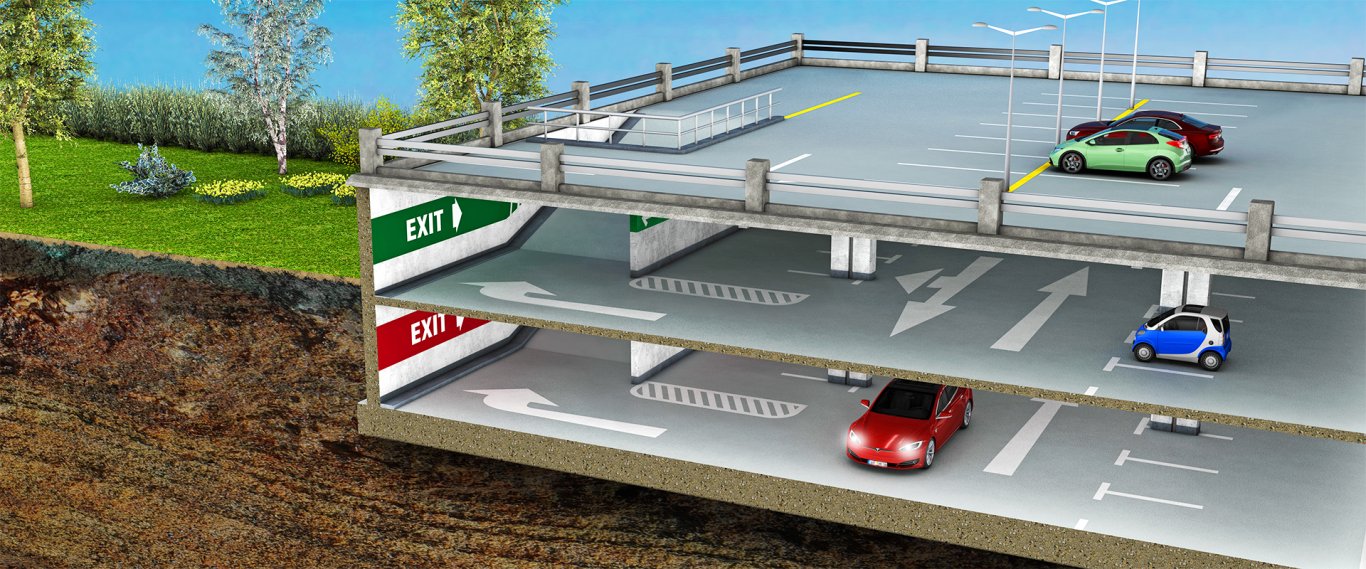



Surface Preparation
Before applying the coating system to the floors in a parking garage or underground car park, the substrate must be prepared. This is usually done by blasting or grinding. This cleans and roughens the base layer in order to achieve a durable bond between the reinforced concrete and the coating and to ensure the long-term function of the entire floor structure.

1
Site Inspection and Job Specification
Prior to substrate preparation, the site manager responsible will need to identify the floor area to be treated. He or she agrees the initial phases of the work with the tradespeople and applicators and ensures that the area is cordoned off so as to allow the work to proceed without interruption. In addition, the site manager documents the condition of the concrete and proposes solutions for foreseeable disruptions to the coating work. This includes, for example, dealing with cracks and any precipitation penetrating into the car park and running onto the surfaces to be coated.

2
Shot Blasting
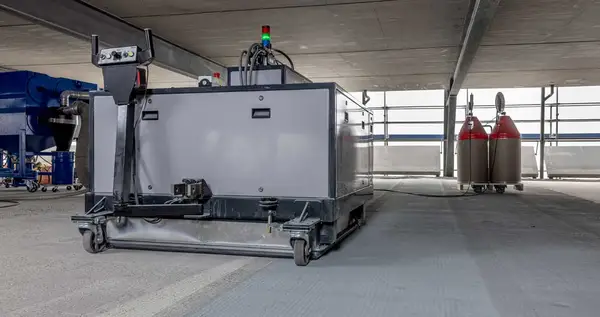
The floors of multi-storey and underground car parks are usually prepared by dust-free shot blasting (aka peening) prior to coating. This involves a blasting machine projecting small steel beads onto the concrete surface at high speed. The impact causes cement slurry, dirt and other adhesion-impeding substances to be loosened and removed. The mixture of beads and detached particles is extracted by the vacuuming action of the blasting machine, with the constituents then being separated for collection. The steel beads are recycled through the machine while the detached particles are bagged for disposal. Dust-free shot peening protects the concrete and produces a microscopically roughened (keyed) surface. This increases the contact surface for the coating system and ensures the best possible adhesive bond.

3
Grinding
In purpose-built car parks, some coating substrates cannot be prepared by shot peening – for example vertical components (supports, wall bases) and corners and edges of the floor. In many countries outside Europe it is actually common practice to grind the entire surface of the floor to be coated. One advantage of grinding lies in the low rate of substrate removal, which simplifies the structure of coating system required. The risk of grinding is that not all adhesion-inhibiting substances will be removed, and also the resultant surface may prove to be too smooth. A powerful diamond grinding machine and very thorough elimination of the grinding dust are therefore key to achieving practicable results. Where existing synthetic resin coatings merely need to be resurfaced, grinding is the usual method used nowadays to prepare the old coating.

4
Milling
Some areas of a purpose-built car park may need to be prepared by milling. Typical applications include the removal of oil-drenched or otherwise dilapidated concrete layers. Old, chloride-contaminated screeds and worn coatings are also often milled out and replaced. Milled surfaces will need to be blasted before applying the new coating system in order to remove dust and loosened aggregates. Because milling can involve the application of high forces and thus unwanted damage to the concrete structure, this technique is only used where absolutely necessary.

5
Quality Assurance
The site manager responsible checks the results of the substrate preparation phase by visual inspection, and records the findings in the site journal. He or she notes down all conspicuous features that have become visible, for example cracks, flaws and leaks, with a view to discussing the requisite remedial measures with the clients and relevant tradespeople. The site manager then initiates measurements to determine the tensile strength, roughness and possibly also the moisture content of the upper concrete edge zone, with the measured values being recorded. If everything is as it should be, he or she accepts the substrate preparation work as completed and releases the area for the coating work.
References
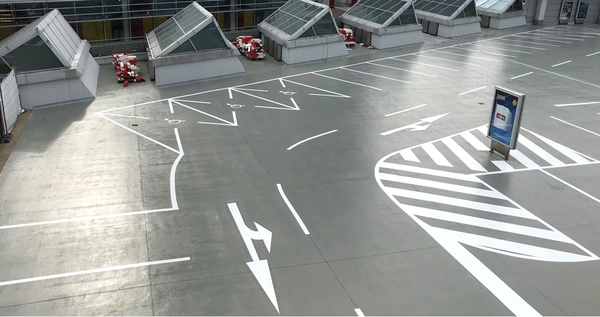
Banska Bystrica - Slovakia

Leipzig - Germany
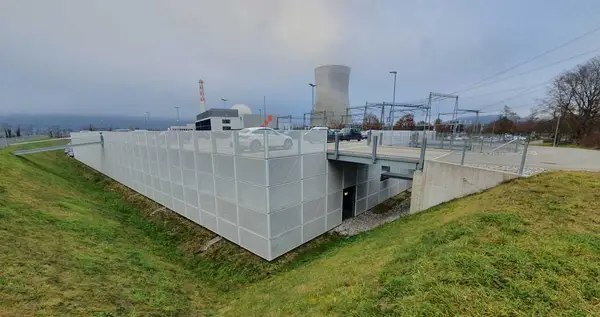
Leibstadt
Germany
Germany
Portugal
Germany
Germany
Romania
More References