 Germany
 Austria
 Belarus
 Belgium
 Bosnia and Herzegovina
 Bulgaria
 Croatia
 Czech Republik
 Denmark
 Finland
 France
 Georgia
 Great Britain
 Hungary
 Ireland
 Latvia
 Lithuania
 Netherlands
 Poland
 Portugal
 Romania
 Serbia
 Slovakia
 Spain
Spain
 Sweden
 Switzerland
 Ukraine
 Ethiopia
 Ghana
Ghana
 Egypt
Egypt
 Guinea
 Israel
 India
India
 Kazakhstan
 Malaysia
 Singapore
 United Arab Emirates
 Vietnam
 Taiwan
 Philippines
 New Zealand
 Australia
 Canada
 Brazil
 Paraguay
 Uruguay
 Bolivia
 Chile
Chile
 Peru
Peru


Cement hydration Part II: The degree of hydration
Cement hydration Part II: The degree of hydration
One of the most important, and often overlooked, characteristics of cement in concrete is its degree of hydration. The higher this value, the more of the original cement particles were converted into hardened cement stone. It has been estimated that in ideal conditions, each kilogram of cement requires 230 grams of water – water-to-cement ratio 0,23 – to fully hydrate. Since ideal conditions are impossible to achieve in our real world, this number is more likely close to 0,35 or 0,38, which means one kilogram of cement requires 350 to 380 grams of water to fully hydrate.
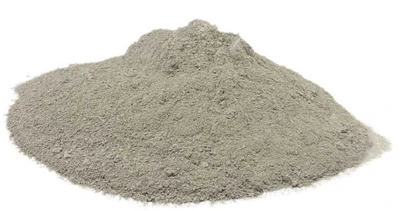
One kilogram of cement requires 350 to 380 grams of water to fully hydrate. © MC-Bauchemie 2025
That is generally not an issue when it comes to regular wet-cast concrete with typical water-to-cement ratios between 0,45 and 0,65. With proper curing, there is generally enough water even if some is lost due to external influences like evaporation. An exception can be made with some high-performance and ultra-high-performance concretes.
When it comes to concrete goods, however, the situation is more complicated. It is not unusual to see semi-dry concrete with water-to-cement ratios below 0,40 or even 0,35. Due to relatively higher porosity, the risk of losing more of the already scarce water increases. Using unhydrated cement grains as a fine filler, which is what happens when not enough water is present in the setting concrete, is not just economically wasteful, but also environmentally unfriendly.
Learn more about the cement hydration process and get tips & tricks for a better degree of hydration.