Germany
 Austria
 Belarus
 Belgium
 Bosnia and Herzegovina
 Bulgaria
 Croatia
 Czech Republik
 Denmark
 Finland
 France
 Georgia
 Great Britain
 Hungary
 Ireland
 Latvia
 Lithuania
 Netherlands
 Poland
 Portugal
 Romania
 Serbia
 Slovakia
 Spain
Spain
 Sweden
 Switzerland
 Ukraine
 Ethiopia
 Ghana
Ghana
 Egypt
Egypt
 Guinea
 Israel
 India
India
 Kazakhstan
 Malaysia
 Singapore
 United Arab Emirates
 Vietnam
 Taiwan
 Philippines
 New Zealand
 Australia
 Canada
 Brazil
 Paraguay
 Uruguay
 Bolivia
 Chile
Chile
 Peru
Peru


What is fibre-reinforced concrete and how does it work?
What is fibre-reinforced concrete and how does it work?
Fibre-reinforced concrete (FRC) is a mix of concrete and embedded fibres, offering high flexural strength, durability and reduced cracking. Whether made of steel, plastic, glass or natural fibres, they can replace traditional reinforcement, improving ductility and load-bearing capacity. Learn more about its function and benefits in this first part of our MC-Pedia series.
Fibre-reinforced concrete (FRC) is a cement-bound, heterogeneous composite material in which discontinuously arranged fibres are homogeneously distributed in the matrix and specifically contribute to improving the mechanical and crack behaviour. It is used in particular where increased demands are placed on the ductility, crack behaviour and durability of the concrete. Fibre-reinforced concrete is not a trend product, but a sustainable solution. It meets modern requirements for strength, durability, cost-effectiveness and sustainability – and is therefore increasingly used in almost all areas of structural engineering.
Technical advantages and relevance of FRC in modern construction
In recent years, fibre-reinforced concrete has developed into a high-performance building material with growing relevance in construction practice. The integration of three-dimensionally distributed fibres into the concrete matrix leads to a targeted improvement in essential material properties. Five key technical advantages that explain the trend towards fibre-reinforced concrete are explained below:
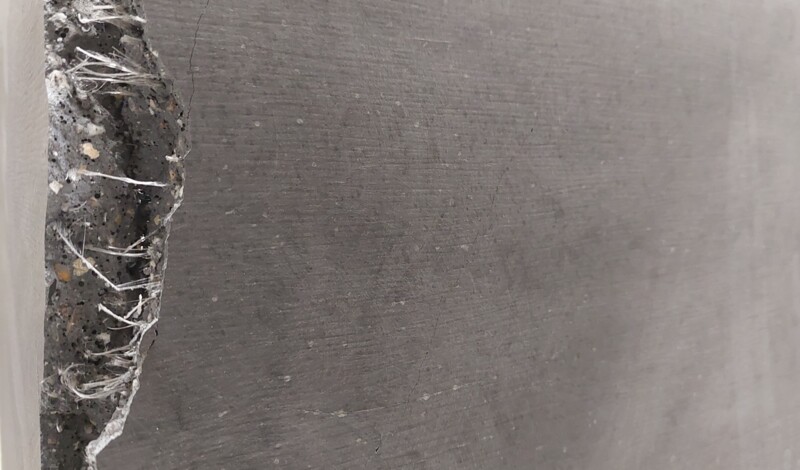 Three-dimensional fibre distribution in the fracture pattern
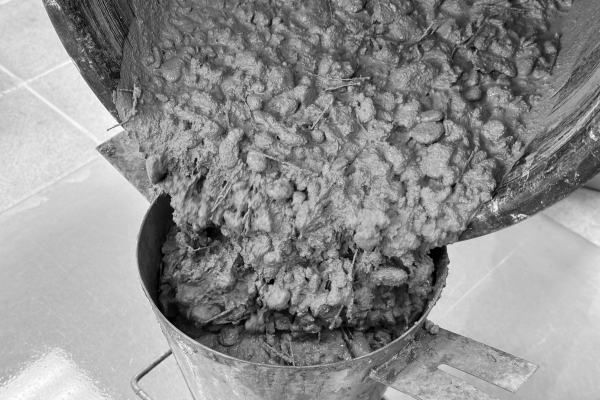
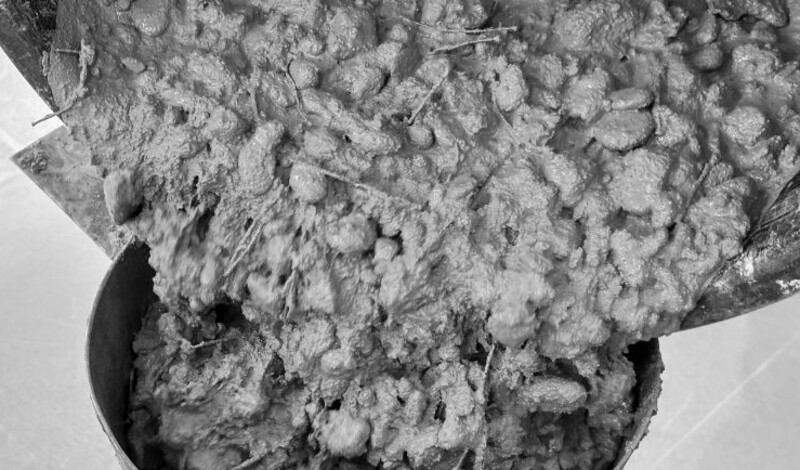 In fibre-reinforced concrete production, getting the concrete design right is critical to ensuring the homogeneous distribution of the fibres.
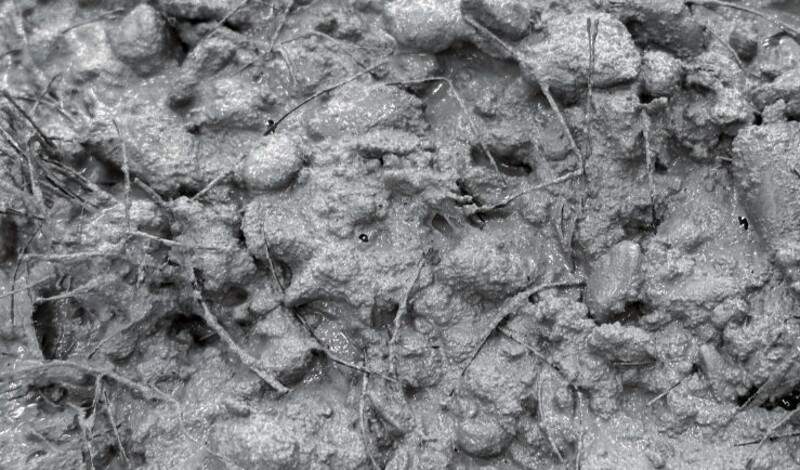
Crack control and durability through fibre-reinforced concrete
The uniform distribution of fibres in the concrete limits cracking in both the early and late stages of hydration. Controlled microcracking significantly reduces the penetration of harmful media carried into the concrete by water. The concrete has increased density and thus durability, and its resistance to corrosion and freeze-thaw cycles is also significantly increased. This property is particularly important for exposed concrete surfaces, tunnel linings and floor slabs.
Ductility and high post-cracking strength through fibre-reinforced concrete
Unlike unreinforced concrete, FRC exhibits ductile failure behaviour, i.e. unlike unreinforced concrete, which fails brittlely, the fibres here take over load components after the onset of cracking and ensure increased residual flexural strength and improved energy absorption in the fracture state. These properties lead to an improvement in load-bearing behaviour at the limit state of load-bearing capacity and enable targeted applications in structural components with high requirements for post-cracking load-bearing capacity.
Replacement and reduction of conventional reinforcement through fibre-reinforced concrete
In numerous applications, conventional steel reinforcement can be completely or partially substituted by the use of structurally effective fibres (according to EN 14889-1/-2). This eliminates time-consuming work steps such as cutting, bending and inserting the reinforcement. It also shortens the concrete manufacturing process As a result, construction times – including cycle times in precast production – can be significantly reduced, leading to lower overall costs and reduced personnel requirements.
Improved fire protection through fibre-reinforced concrete
Polypropylene-based thermoplastic fibres make a significant contribution to fire protection. They melt when exposed to heat and create capillary channels through which water vapour can escape. This prevents explosive spalling of the concrete edge zones in the event of a fire and contributes significantly to maintaining the load-bearing structure at high temperatures – a crucial aspect in tunnel construction and fire tests in accordance with the Dutch RWS curve or the German ZTV-ING.
Sustainability and resource efficiency through fibre-reinforced concrete
Fibre-reinforced concrete makes a demonstrable contribution to resource-efficient and sustainable construction. By substituting or reducing conventional steel reinforcement and minimising load-bearing cross-sections while maintaining structural performance, it is possible to create slim components. These have a significantly reduced carbon footprint compared to conventional reinforced structures. In addition, the increased crack resistance and durability of FRC leads to significantly reduced maintenance requirements over the life cycle of the building. Overall, the use of FRC thus contributes to resource efficiency, emission reduction and the fulfilment of recognised sustainability building certifications.