 Germany
 Austria
 Belarus
 Belgium
 Bosnia and Herzegovina
 Bulgaria
 Croatia
 Czech Republik
 Denmark
 Finland
 France
 Georgia
 Great Britain
 Hungary
 Ireland
 Latvia
 Lithuania
 Netherlands
 Poland
 Portugal
 Romania
 Serbia
 Slovakia
 Spain
Spain
 Sweden
 Switzerland
 Ukraine
 Ethiopia
 Ghana
Ghana
 Egypt
Egypt
 Guinea
 Israel
 India
India
 Kazakhstan
 Malaysia
 Singapore
 United Arab Emirates
 Vietnam
 Taiwan
 Philippines
 New Zealand
 Australia
 Canada
 Brazil
 Paraguay
 Uruguay
 Bolivia
 Chile
Chile
 Peru
Peru


Concrete Fibres
Concrete Fibres
Challenges & Applications
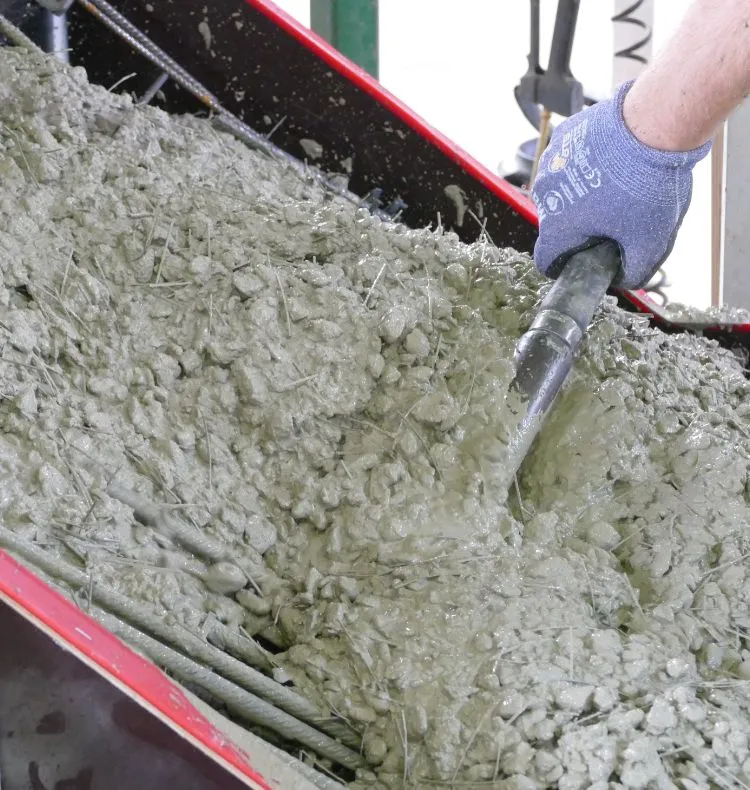
Fibre-reinforced concrete with numerous advantages
Fibres have been used since ancient times to improve the material properties of building materials. At that time, for example, plant or animal fibres were added to the production of clay bricks and clay tiles to make the material behaviour more ductile. Nowadays, fibres play a particularly important role in concrete construction. The addition of fibres significantly improves the hardened concrete properties. This is due to the fact that fibres bridge any cracks in the concrete tensile zone and transfer the forces across the crack flanks. As a result, fibres in the concrete matrix also increase the tensile, bending and shear load-bearing capacity and are very effective in limiting the crack width. These advantages of fibre-reinforced concrete can be used to optimise component cross-sections and conventional steel reinforcement. The result is not only economic savings, but also sustainable advantages.
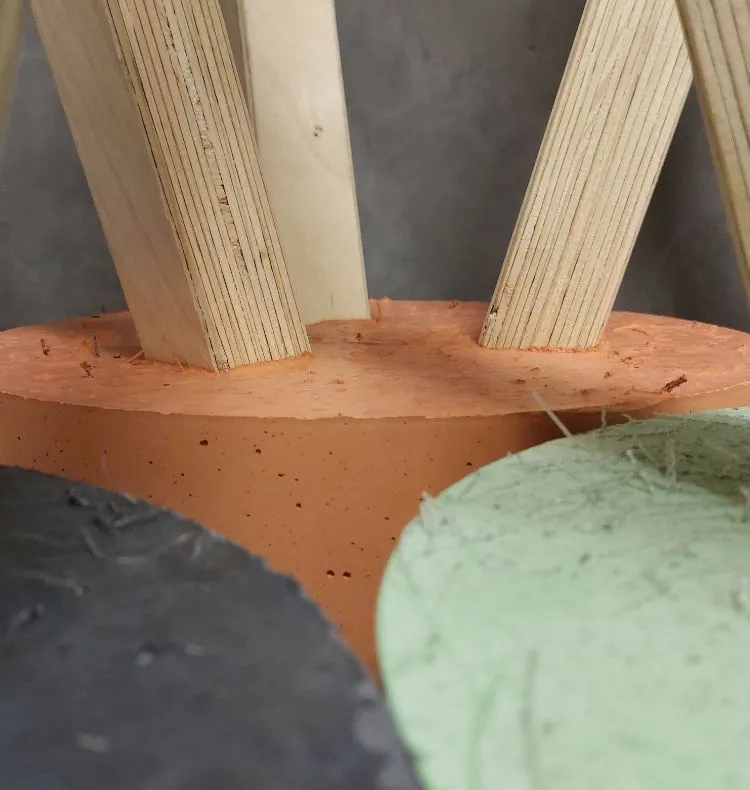
Fibre-reinforced concrete for sustainable construction
Modern concretes with sustainability requirements must fulfil not only physical but also functional requirements. When using reinforcing steel, for example, reference is made to its energy-intensive production, heavy weight and cost-intensive transport. With regard to the sustainability of buildings, however, the energy advantage is particularly important. Fibres, especially polymer fibres, contribute to CO2 reduction as their production requires significantly less energy than steel.
By partially or completely replacing reinforcing steel with fibres, lightweight and slender components can also be produced. These are produced without the time-consuming laying of steel mesh. This saves time, energy and labour on the construction site.