 Germany
 Austria
 Belarus
 Belgium
 Bosnia and Herzegovina
 Bulgaria
 Croatia
 Czech Republik
 Denmark
 Finland
 France
 Georgia
 Great Britain
 Hungary
 Ireland
 Latvia
 Lithuania
 Netherlands
 Poland
 Portugal
 Romania
 Serbia
 Slovakia
 Spain
Spain
 Sweden
 Switzerland
 Ukraine
 Ethiopia
 Ghana
Ghana
 Egypt
Egypt
 Guinea
 Israel
 India
India
 Kazakhstan
 Malaysia
 Singapore
 United Arab Emirates
 Vietnam
 Taiwan
 Philippines
 New Zealand
 Australia
 Canada
 Brazil
 Paraguay
 Uruguay
 Bolivia
 Chile
Chile
 Peru
Peru

Reference
Self-regulating corrosion protection for cooling tower
Reference
Self-regulating corrosion protection for cooling tower
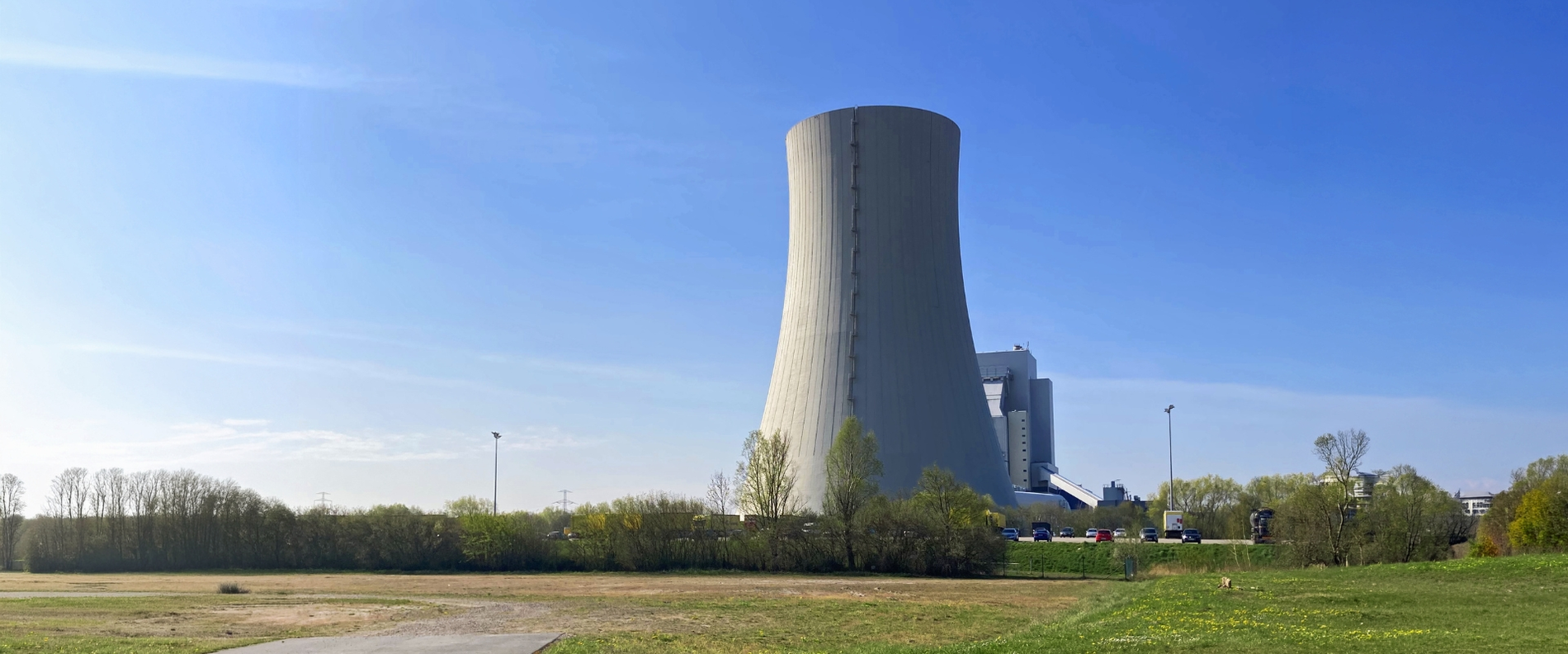
Self-regulating corrosion protection safeguards Rostock cooling tower
Germany
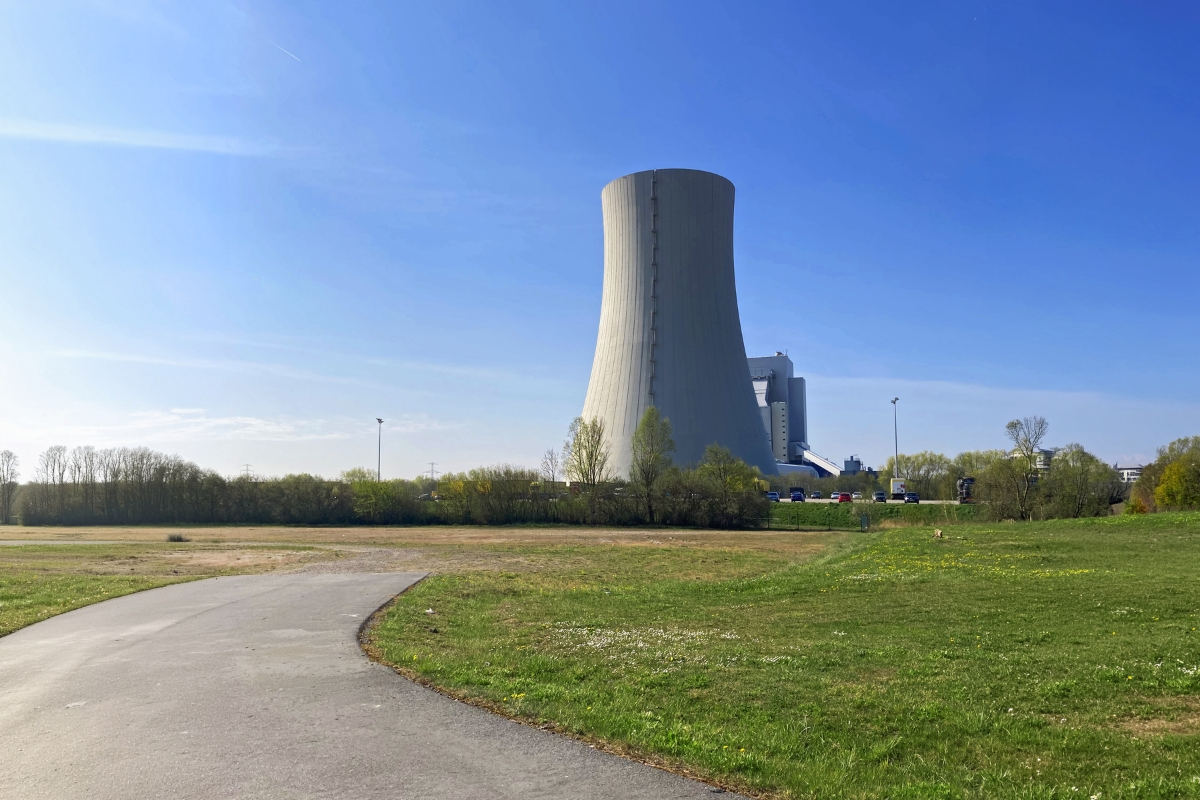
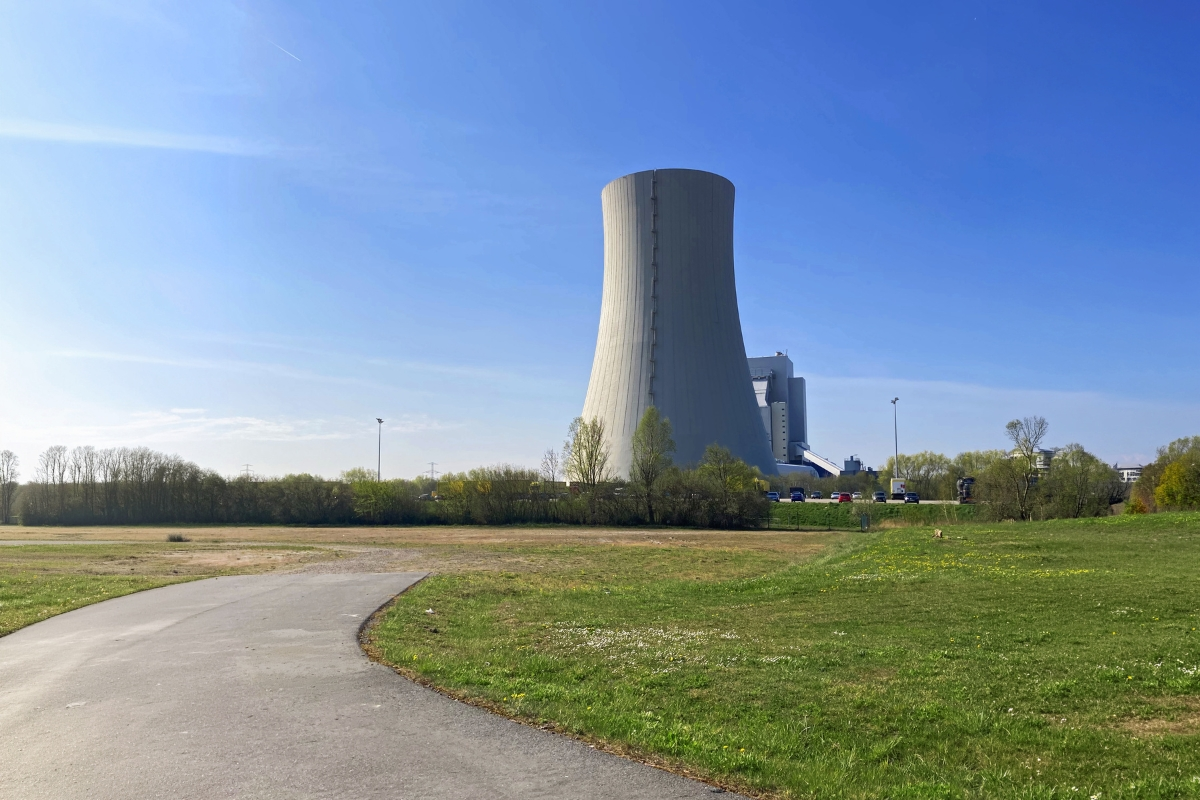
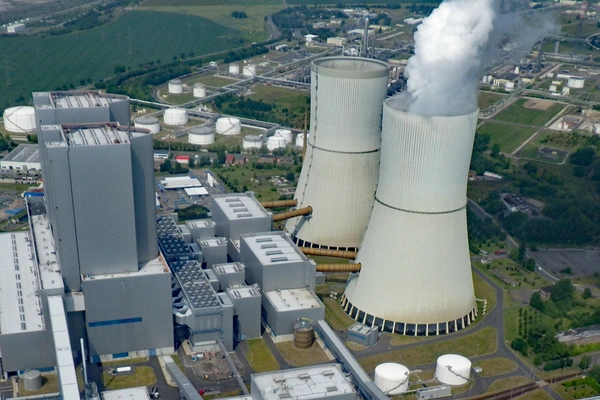
The cooling tower at the Rostock coal-fired power plant is a vital part of the energy infrastructure in Mecklenburg-Western Pomerania. To ensure the durability of the heavily stressed reinforced concrete columns, the operator is relying on an innovative, self-regulating corrosion protection system from MC-Bauchemie and Grillo Werke AG: the MC-KKS/B system.
-
Name
Self-regulating corrosion protection safeguards Rostock cooling tower
-
Country
Germany
-
Fields of Expertise
-
Categories
-
Products
The Rostock coal-fired power plant is located directly on the Baltic Sea coast. As a result, it is exposed to high moisture levels, fluctuating temperatures, and salt-laden air. These are challenging conditions for a concrete structure. The project involved the step-by-step rehabilitation of the load-bearing reinforced concrete columns of the plant’s cooling tower. The operator is KNG Kraftwerks- und Netzgesellschaft mbH.
Challenge: heavily chloride-contaminated reinforced concrete components
The greatest challenge was dealing with heavily chloride-contaminated reinforced concrete components. Conventional repair methods would have required extensive concrete removal, longer downtime, and significant maintenance effort. In addition, disruption to ongoing power plant operations had to be kept to a minimum. What was needed, therefore, was a durable, low-maintenance, and technically reliable solution capable of sustainably reducing further corrosion progress to a minimum.
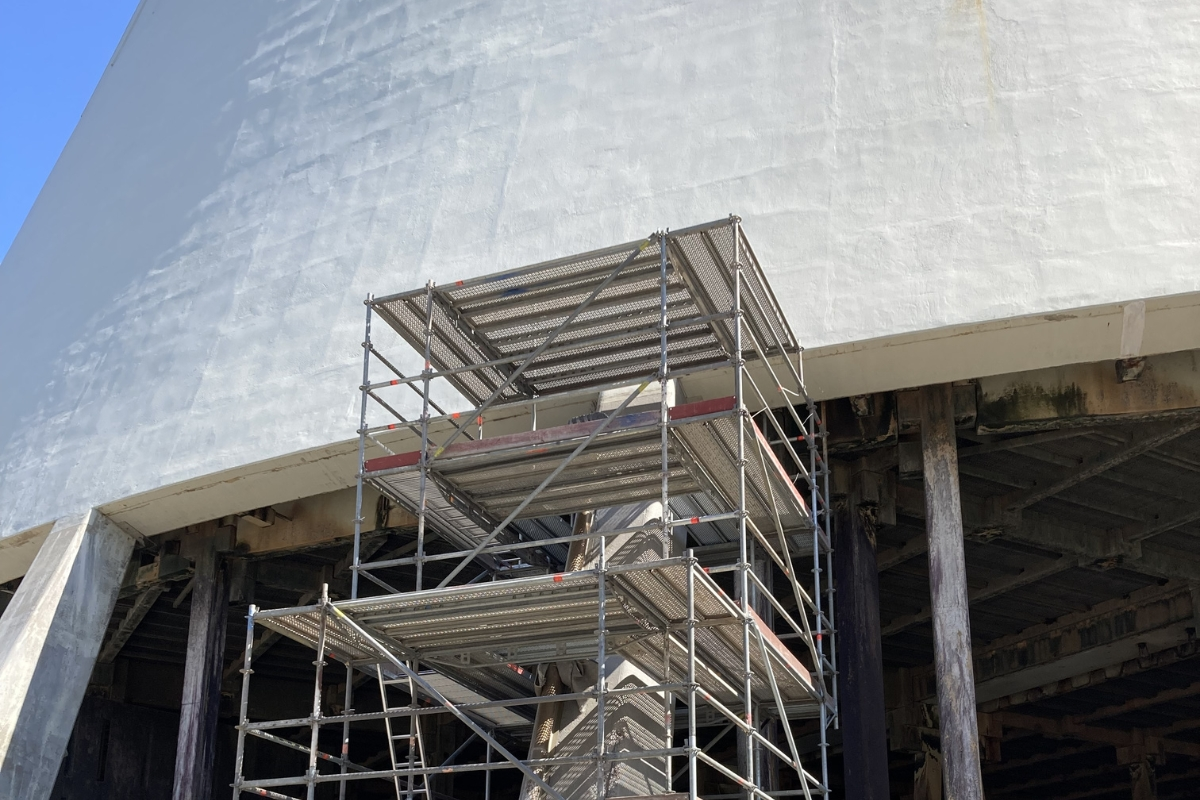
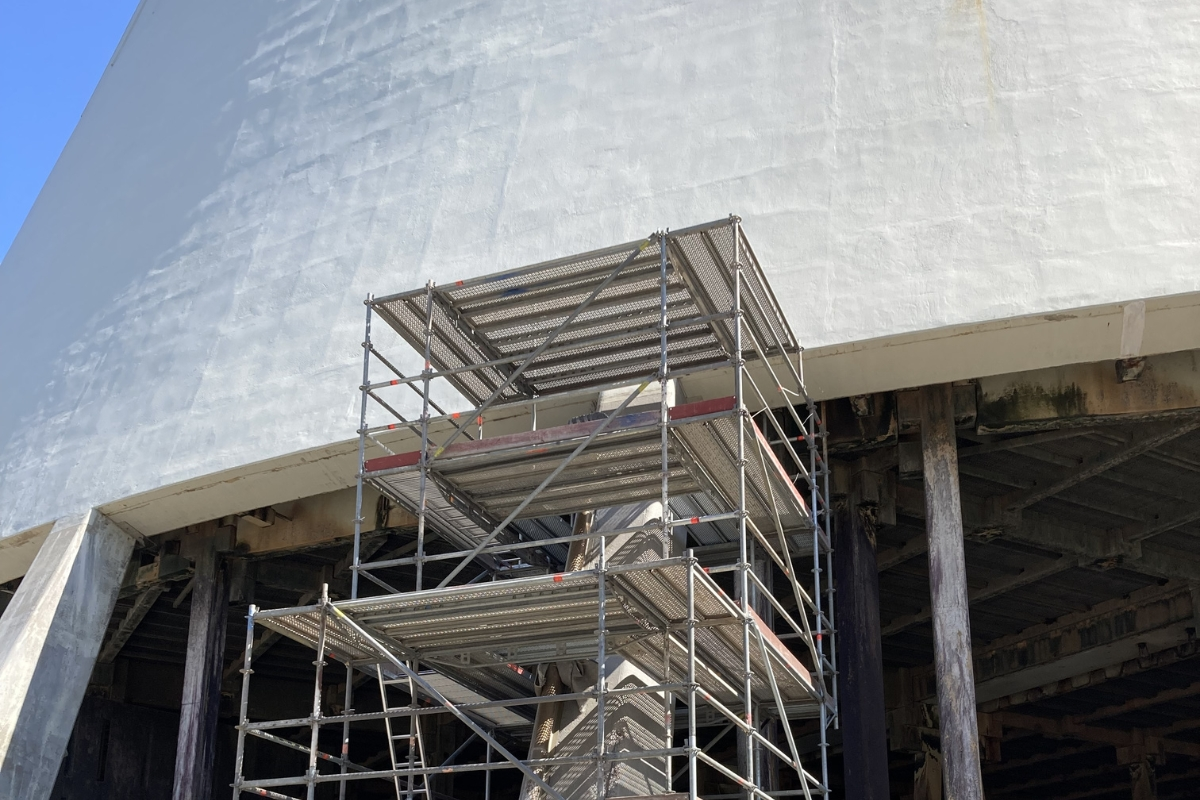
MC proposed the use of the MC-KKS/B system, a cathodic corrosion protection solution for heavily stressed reinforced concrete components that MC-Bauchemie developed together with Grillo Werke AG. The decisive factor in selecting this system was its self-regulating operating principle, as it does not require readjustment of the protective current and provides permanent protection for the reinforcement against further corrosion. Following comprehensive structural investigations carried out as early as 2012, which revealed high chloride contamination and ongoing reinforcement corrosion, the operator created a test area together with specialist partners in 2016 on a column of around 40 m² in order to observe the MC-KKS/B protection system under real-life conditions. After the successful test phase, the rehabilitation of six columns began in 2022, followed by another six in 2025. Further columns are scheduled to be rehabilitated using the MC-KKS/B system during the current year.
The solution: cathodic corrosion protection with MC-KKS/B
The system was applied in several coordinated steps. The central component is the zinc thermal spray layer of the CP system, which acts as a sacrificial anode and actively protects the reinforcement against further corrosion. MC-DUR KKS Primer LM was used to ensure a durable bond to the concrete. This was followed by the application of MC-DUR KKS Base, which securely embeds the zinc spray layer, provides mechanical protection, and creates an even surface for the subsequent system build-up. The final layer is a seal coat of MC-DUR 2496 CTP, a surface protection product specially developed for cooling towers. The material is UV-stable, chemically resistant, and has low susceptibility to soiling. In addition, it can be applied reliably even under adverse weather conditions and, thanks to its good cleanability, provides a permanently low-maintenance surface protection system.
Corrosion successfully stopped
The self-regulating CP system has sustainably halted corrosion progress in the rehabilitated columns. The minimally invasive intervention significantly reduced construction time and downtime and lowers maintenance requirements over the long term. The measures implemented so far confirm the high reliability of the system under real operating conditions. The planned continuation of the work in the coming years underlines the operator’s confidence in the solution and in the technical expertise of MC and Grillo AG. The project therefore makes an important contribution to the long-term preservation of the cooling tower’s value and to the operational safety of the Rostock power plant.
RELATED CONTENT
More References